
Drager Evita 2 Ventilator
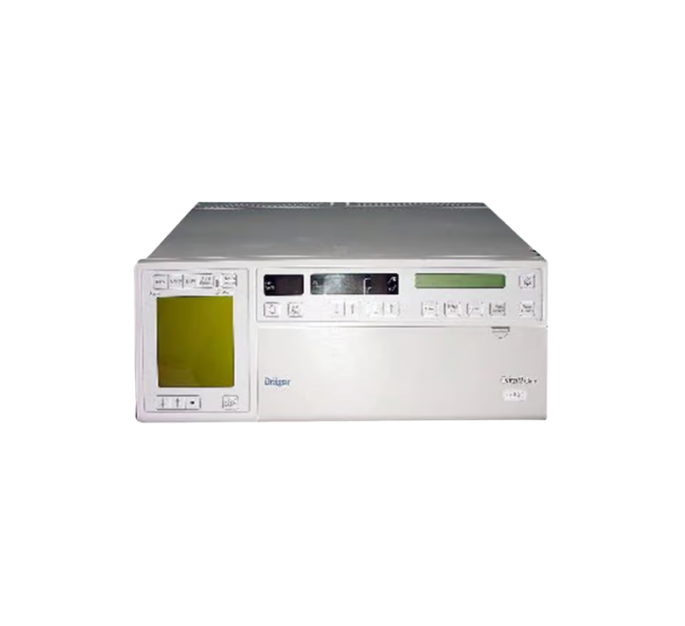
Drager Evita 2 Ventilator
The Dräger Evita 2 Ventilator provides robust and dependable ventilation support, crucial for managing a broad range of respiratory conditions in critical care settings. Its design emphasizes both functionality and user-friendliness, ensuring that it meets the high demands of modern medical environments.
Questions About This Product?
Our representatives are waiting to answer any questions you may have.
Features:
The Dräger Evita 2 is an advanced ventilator designed primarily for adult and pediatric patients in intensive care settings. As part of the renowned Evita series, the Evita 2 continues Dräger’s tradition of providing reliable and comprehensive respiratory support to critically ill patients. This model is well-regarded for its versatility and ease of use, making it a valuable tool in both intensive care units and specialized respiratory care wards.
Key Features of the Dräger Evita 2 Ventilator
- Versatile Ventilation Modes: The Evita 2 supports a variety of ventilation modes, including Volume Control (VC), Pressure Control (PC), Synchronized Intermittent Mandatory Ventilation (SIMV), and Pressure Support Ventilation (PSV). These modes cater to the specific respiratory needs of patients and allow for flexible treatment strategies.
- Integrated Monitoring: It offers detailed monitoring capabilities that enable clinicians to assess vital respiratory parameters such as tidal volume, respiratory rate, and peak inspiratory pressure. This ensures precise adjustments to ventilation can be made in real-time based on patient needs.
- User-Friendly Interface: Features a straightforward user interface with clear displays and accessible controls, simplifying the management of ventilation settings and enhancing ease of use for medical staff.
- Reliability and Durability: Built to withstand the demanding environments of intensive care units, ensuring long-term reliability and performance.
- Safety Alarms: Equipped with comprehensive alarm systems that alert medical staff to potential issues, improving patient safety during ventilation.
Applications in Medical Care
- Intensive Care Units (ICUs): The Evita 2 is primarily used in ICUs where patients require meticulous respiratory support due to severe medical conditions.
- Pediatric Care: While predominantly used for adult care, its adjustable settings also make it suitable for pediatric patients, providing the necessary modifications to meet the different physiological needs of younger patients.
- Specialized Respiratory Units: It is also effective in specialized units where patients may need prolonged ventilation, such as in respiratory step-down units or long-term acute care facilities.
Specifications
- Spontaneous breathing strategy. Spontaneous breathing reduces the risk of atelectasis and improves the ventilation/perfusion ratio by maintaining a higher functional residual capacity.
- The right mode for every patient. The wide range of patients covered also reduces the amount of staff training required and ensures greater flexibility in the use of resources.
- Two-in-one ventilation. Mask ventilation can assist the weaning process by reducing the reintubation rate or even preventing intubation in the first place.
- Everything in view. The high-resolution full-color screen displays comprehensive information on a patient’s status, always showing two ventilation curves and six monitored values, and the screen configuration can be customized to show the most important values for a particular ICU.
- One knob, simplified settings. The rotary knob plays a key role. The active setting parameters are visible at a glance and changes can be made by the well-established “select-adjust confirm” principle.
- Ventilation at a glance. The principle of only showing the necessary parameters reduces the complexity of everyday monitoring.
- Simpler and speedier standard procedures. Contains numerous functions to speed up and simplify routine procedures. Start-up settings can be configured to specific ICU practices.
Dimensions
- Height: 11.4 In (290 cm)
- Width: 20.9 In (530 cm)
- Depth: 17.7 In (450 cm)
- Weight: Approx. 27 kg (60 lbs)
- Diagonal Screen size: 6.5” TFT LCD color Display
Ventilation Settings
- Ventilation mode: IPPV, IPPVAssist (CMV, CMVAssist) SIMV, SIMVASB (SIMV, SIMV/Psupp) MMV, MMVASB (MMV, MMV/Psupp) BIPAP1), BIPAP1)ASB, BIPAP1)Assist (PCV+, PCV+/Psupp, PCV+Assist) CPAP, CPAPASB (CPAP, CPAP/Psupp) APRV (optional) ILV (optional)
- Enhancements: AutoFlow™ – Automatic adaptation of inspiratory flow in volume controlled modes ATC™ – Automatic Tube Compensation (optional) IV – Mask Ventilation (optional)
- Ventilation frequency (f): 0 to 100 /min, 0 to150 /min (Neonatal)
- Inspiration time (Tinsp): 0.1 to 10 s
- Tidal volume (VT) (BTPS): 0.1 to 2.0 L (Adult) 0.02 to 0.3 L (Pediatric) 0.003 to 0.1 L (Neonatal)
- Inspiratory flow: 6 to 120 L/min (Adult) 6 to 30 L/min (Pediatric and Neonatal)
- Inspiratory pressure: 0 to 80 mbar (cmH2O) PEEP / intermittent PEEP: 0 to 35 mbar (cmH2O)
- Pressureassist (PASB) (Psupp): 0 to 80 mbar (cmH2O)
- Rise time for inspiratory pressure: 0 to 2 s
- O2 concentration: 21 to 100 Vol.%
- Multi-sense Trigger Criteria: Internal automatic pressure trigger, Flow, Volume (Flow adjustable 0.3 to 15 L/min)
Measured Values Displayed
- IAirway pressure: Peak pressure, plateau pressure, mean pressure, PEEP, min. pressure (0 to 99 mbar/cmH2O)
- Minute volume (MV), (BTPS): MV, MVspont, MVleak (0 to 99 L/min)
- Tidal volume (VT), (BTPS): Inspired VT, expired VT, VTASB (VTPS) (0 to 3999 mL)
- Breathing frequency (f): ftotal, fspon, fmand. (0 to 300/bpm)
- O2 concentration: (FiO2) Inspired O2 concentration (15 to 100 Vol.%)
- Lung mechanics: Resistance ((0.0 to 600 mbar/L/s)(cmH2O/L/s) Compliance ((0.0 to 300 mL/mbar)(mL/cmH2O)
- Breathing gas temperature: 18°to 51°C
- Waveforms: Airway pressure-time, flow-time, volume-time, …
- Trends (optional): FiO2, MV, VT, f, PEEPi, R, C, etCO2, …
- Loops (optional): Paw-V, V-Flow, Flow-Paw, …
- Capnography (etCO2) (optional): 0 to 100 mmHg
- CO2 production (VCO2): 0 to 999 mL/min, STPD
- Serial dead space Vds: 0 to 999 mL, BTPS
Alarms / Monitoring
- Airway pressure: High/Low
- Expired minute volume: High/Low
- Tidal volume: High
- Tidal volume (VT) (BTPS): 0.1 to 2.0 L (Adult) 0.02 to 0.3 L (Pediatric) 0.003 to 0.1 L (Neonatal)
- Inspiratory flow: 6 to 120 L/min (Adult) 6 to 30 L/min (Pediatric and Neonatal)
- Apnea alarm time: 5 to 60 s
- Spontaneous breath frequency: High
- Inspired O2 concentration: High/Low
- Breathing gas temperature: High
- SpO2 pulse (optional): High/Low
- etCO2 (optional): High/Low
Performance Data
- Max. flow for pressure support and spontaneous breathing: 180 L/min (adult), 60 L/min (pediatric)
- Valve response time: = 5 ms
- Control principle: Time cycled, volume constant, pressure-controlled
- Safety relief valve: 100 mbar (cmH2O)
- Leakage compensation
- Hose system compensation
- Outlet for pneumatic nebulizer
Specifications:
| Specification | Value |
|---|---|
| Height | 11.4 In (290 cm) |
| Width | 20.9 In (530 cm) |
| Depth | 17.7 In (450 cm) |
| Weight | Approx. 27 kg (60 lbs) |
| Diagonal Screen size | 6.5” TFT LCD color Display |